

Quick answer: A biological sequence is a string of units read in order along a molecule: letters for DNA and RNA nucleotides, or residue codes for amino acids in proteins. Biologists compare sequences to find conserved regions, predict structure and function, and infer evolutionary relationships from shared ancestors and newly acquired differences.
If you are searching to know about biological sequences, here’s the answer for you.
Biological Sequences
Sequence similarity is an incredible asset for finding natural capacity. Similarly, as the old Greeks utilized near life structures to comprehend the human body and language specialists utilized the Rosetta stone to unravel Egyptian symbolic representations, today we can utilize relative sequence investigation to get genomes, RNAs, and proteins. Be that as it may, for what reason are natural sequences like each other in any case? The response to this inquiry isn’t straightforward and requires a comprehension of molecular and developmental science.
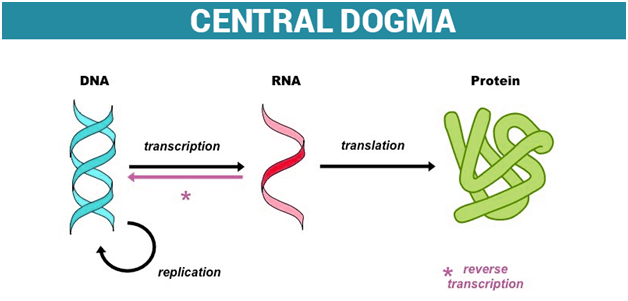
Central Dogma of Molecular Biology
Molecular biology begins with the Central Dogma of Molecular Biology, which depicts the way by which data contained in DNA is changed over to protein particles with explicit capacities. Expressed basically, the Central Dogma is: “from DNA to RNA to protein.”
Related: Once you know the sequence types, the next skill is judging similarity output honestly — read how to interpret BLAST results.
Related: Raw sequences are the input the assembler reads — see genome assembly guide.
Related: Raw sequences are what a pipeline quality-checks before anything else — see how that happens in our read quality control guide.
Now that you’ve learnt Do bioinformatics need programming? If you want to learn Bioinformatics as coursework with a certificate. Check our Bioinformatics course from Ampersand Academy. Also, read about Biostatistics.
Frequently asked questions
What are the four letters in DNA?
A, T, G, and C. They are adenine, thymine, guanine, and cytosine, which together carry the genetic code.
What does a biological sequence represent?
It shows the order of units along a molecule, such as DNA bases, RNA bases, or protein amino acids.
Why do scientists compare sequences?
To spot conserved motifs, detect mutations, predict protein function, and trace how species are related through evolution.
Last updated on · Written by Vijay Gladwin