
Quick answer: A nucleoside is a nitrogenous base joined to a sugar, and a nucleotide is that same base plus sugar plus one to three phosphate groups. Ribonucleotides use ribose and form RNA, while deoxyribonucleotides use deoxyribose and form DNA. The phosphate tail carries energy and defines polarity, which makes DNA and RNA polymers.
Learn about Nucleosides and Nucleotides
Nucleosides
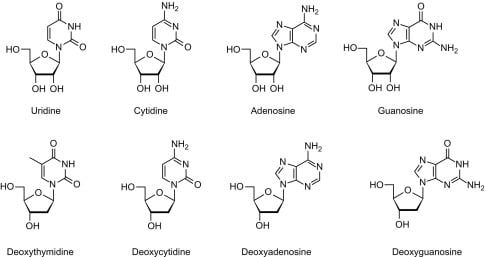
Nitrogen bases linked to sugars are called as Nucleosides. Partial hydrolysis of nucleic acids yields compounds in which the pentose is covalently linked by a β glycosidic linkage to a base. Adenine linked to ribose is called adenosine. Guanine linked to ribose is guanosine. Pyrimidine nucleosides are cytidine or deoxycytidine, thymidine or deoxythymidine.
Adenine + Ribose = Adenosine (AR)
Guanine + Ribose = Guanosine (GR)
Cytosine + Ribose = Cytidine (CR)
Uracil + Ribose = Uridine (UR)
Adenine + deoxy ribose = Deoxy adenosine (AdR)
Guanine + deoxy ribose = Deoxy guanidine (GdR)
Cytosine + deoxy ribose = Deoxy cytidine (CdR)
Thymine + deoxy ribose = Deoxy thymidine (TdR)
Nucleotides
Nucleosides linked to phosphate group are called Nucleotides. Nucleotides are phosphoric acid esters of nucleosides. These can occur in free form or as constituents of nucleic acid. They are linked end to end (5’ to 3’). Nucleotides join by the alternating position of sugar and phosphate group in the backbone of the DNA molecule.
Each nucleotide contains
- Nitrogenous bases
- Purines (Adenine or Guanine)
- Pyrimidines (Cytosine or Thymine)
- Deoxyribose (Pentose- 5 carbon sugar)
- Phosphate group
Nucleotides occurring in RNA and DNA
Ribonucleotides
| Adenosine 5 phosphate | Adenylic acid | AMP |
| Guanosine 5 phosphate | Guanilic acid | GMP |
| Cytidine 5 phosphate | Cytidic acid | CMP |
| Uridine 5 phosphate | Uridylic acid | UMP |
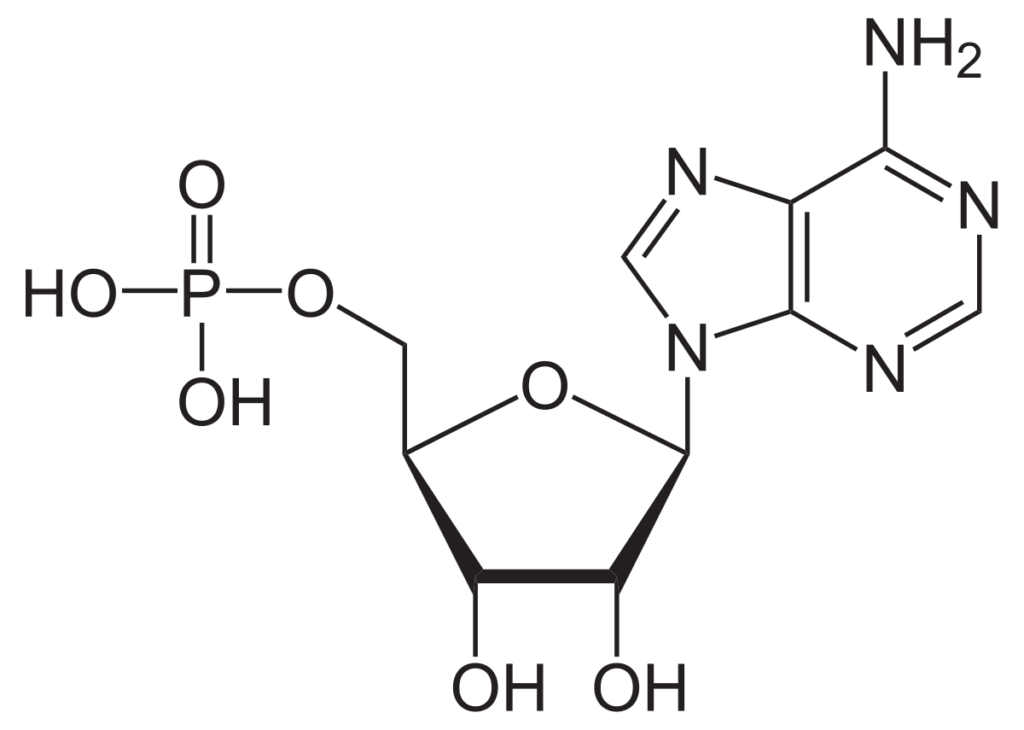
AMP
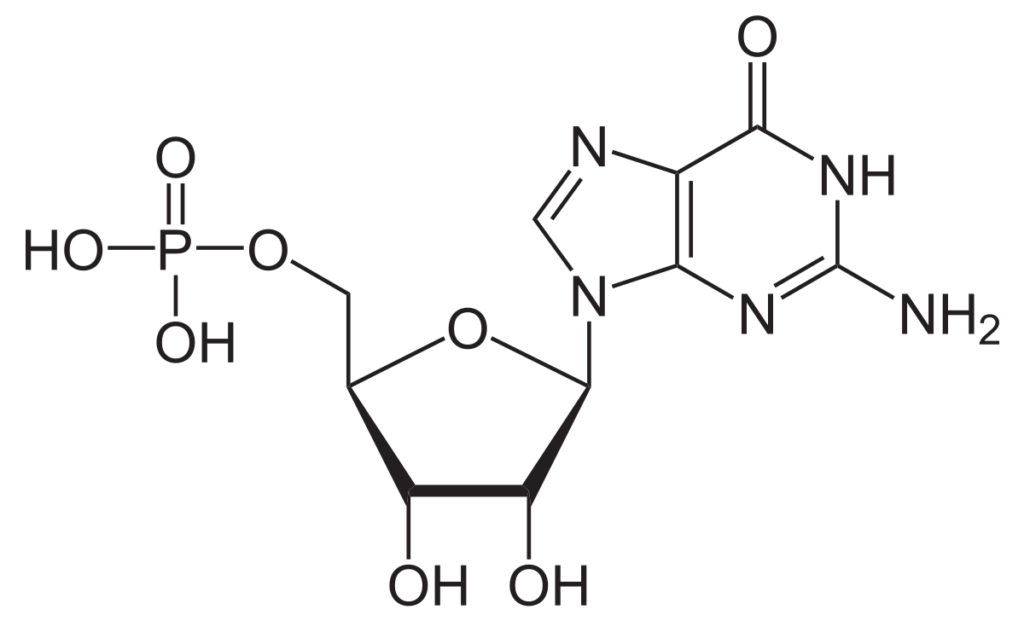
GMP

CMP

UMP
Deoxyribonucleotides
| Deoxy adenosine 5 phosphate | Deoxy adenylic acid | dAMP |
| Deoxy guanosine 5 phosphate | Deoxy guanilic acid | dGMP |
| Deoxy cytidine 5 phosphate | Deoxy cytidic acid | dCMP |
| Deoxy uridine 5 phosphate | Deoxy uridylic acid | dUMP |
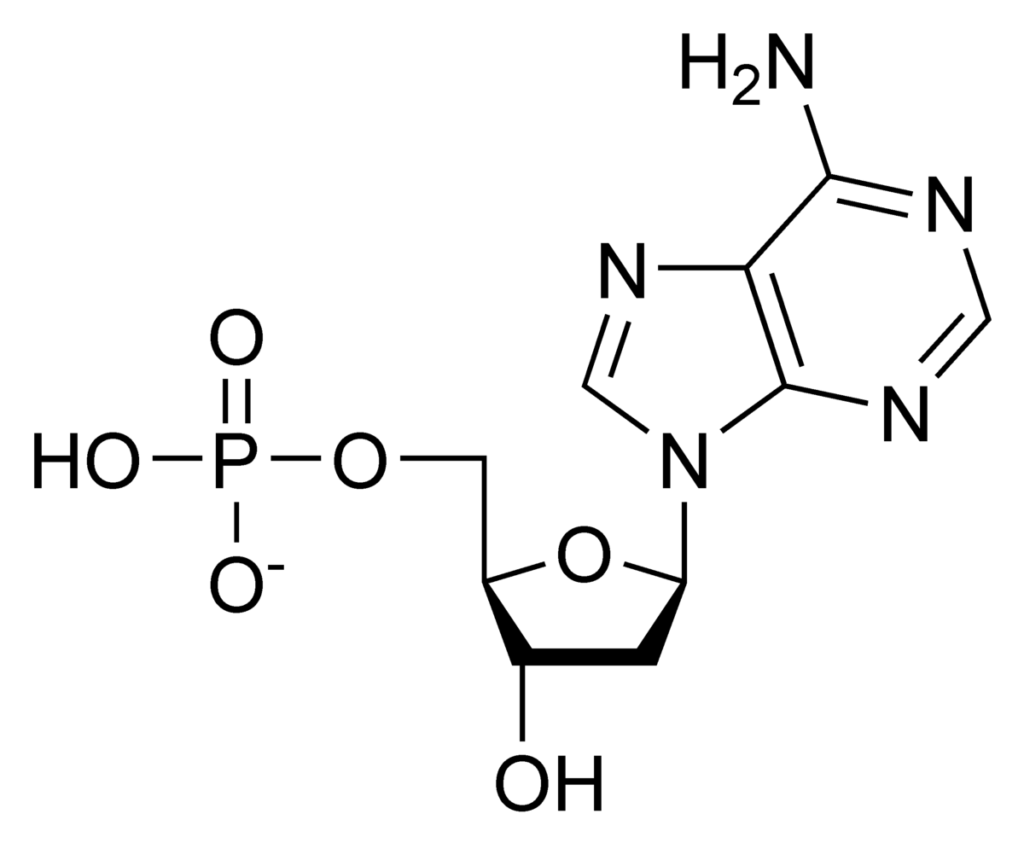
dAMP

dGMP
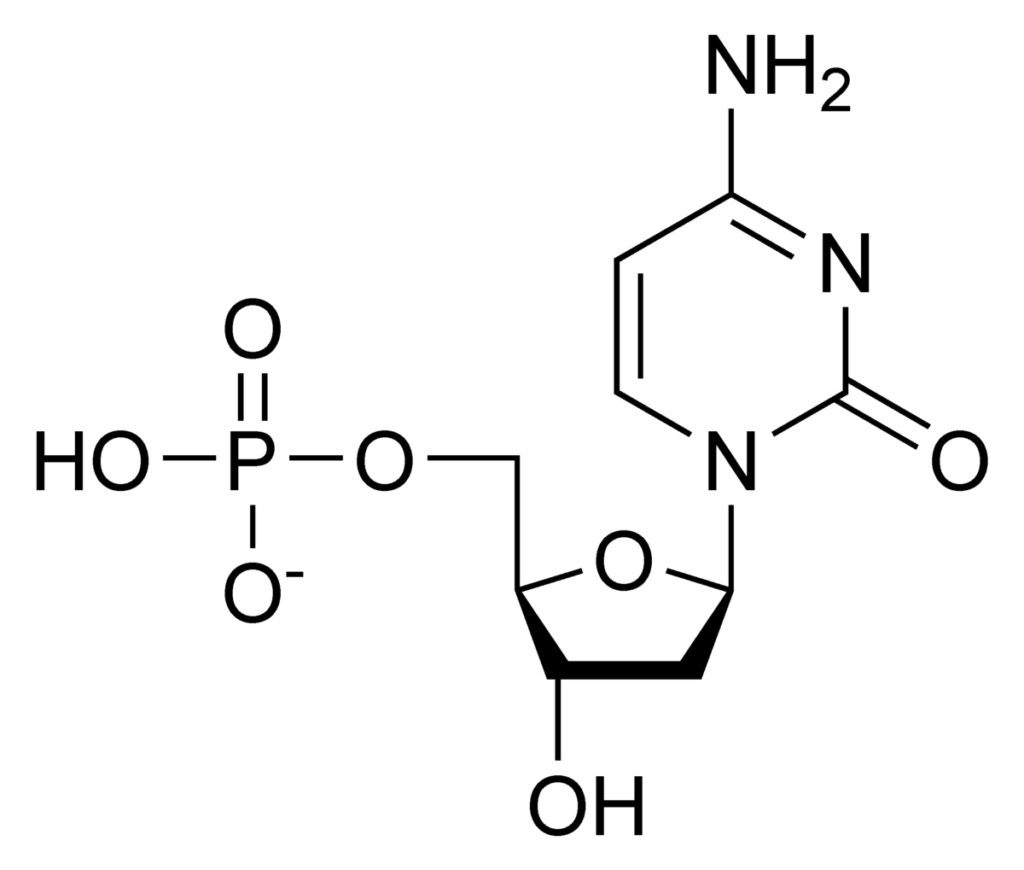
dCMP
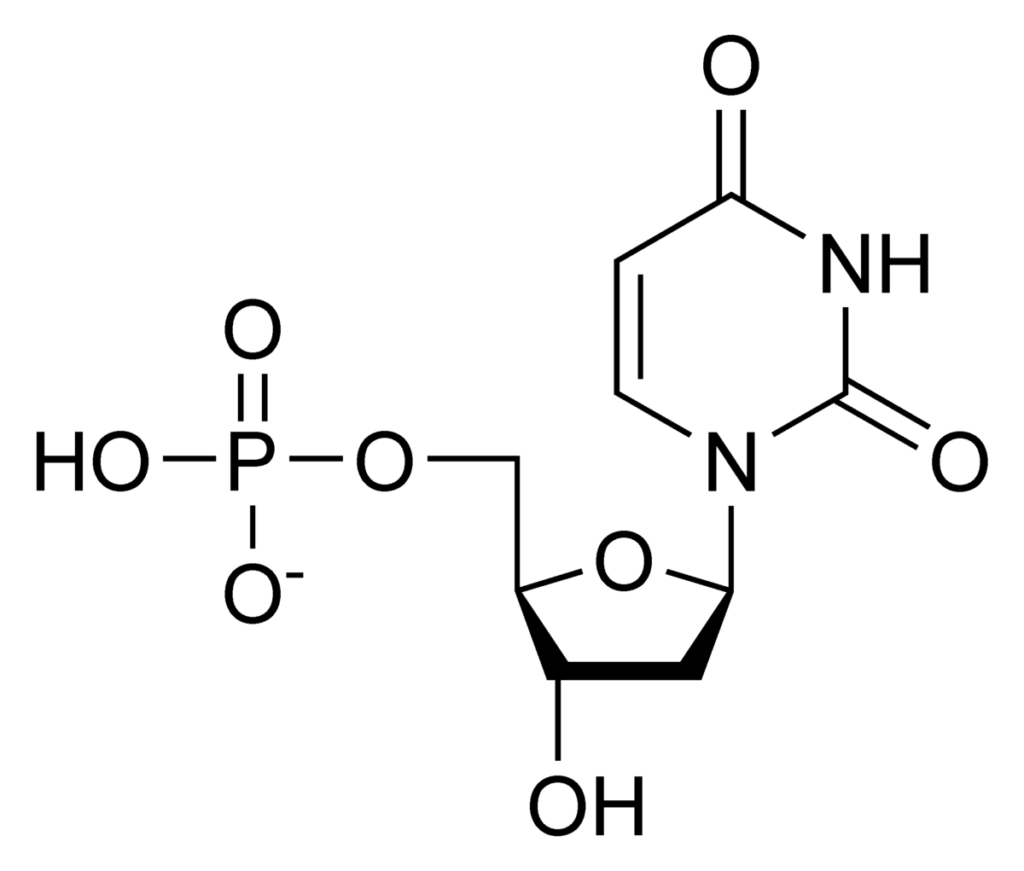
dUMP
Related: Nucleotides are the alphabet of the genome — see how bioinformatics turns that alphabet into a gene map in our genome annotation guide.
Related: Sequencing reads RNA nucleotide by nucleotide — see bulk RNA-seq pipeline guide.
Related: Once you know the bases, the next question is which ones differ from the reference — see how that is answered in our variant calling guide.
Now that you have learnt about Nucleosides and Nucleotides, If you want to learn Bioinformatics as coursework with a certificate. Check our Bioinformatics course from Ampersand Academy. Also, read about Biostatistics.
Related: Want every nucleoside name in DNA and RNA with ready-made naming tables? See our nucleosides in DNA and RNA naming guide.
Frequently asked questions
What is the difference between a nucleoside and a nucleotide?
A nucleoside is base plus sugar, while a nucleotide also carries phosphate groups that add charge and energy.
What is the difference between RNA and DNA nucleotides?
RNA nucleotides contain ribose sugar, while DNA nucleotides contain deoxyribose, which lacks the hydroxyl group at position two.
Why is a nucleoside different from a plain sugar?
A sugar alone is a pentose. Adding a nitrogenous base turns it into a nucleoside, the basic unit of nucleic acids.
Last updated on · Written by Vijay Gladwin