
Quick answer: Overexploitation of forests means using trees and forest products faster than the forest can replace them. Logging for timber and pulp, cutting fuelwood, grazing animals and clearing land for farming all reduce forest cover faster than trees grow back. Over time this causes soil erosion, habitat loss, floods, a weaker carbon sink and climate change.
Know in detail about deforestation its causes and consequences. Learn more about overexploitation of Forests
Due to overpopulation, the materials abounding by the forest are not sufficient to meet the people’s demands. Hence, the overexploitation of forest materials has increased day by day. This leads to deforestation.
Deforestation:
The conversion of forested areas to non-forest is deforestation. Deforestation is the process of removal of forest resources due to natural or human activities. Agricultural land, golf courses, cattle pasture, mining, and petroleum exploration all contribute to human-caused deforestation. Tsunamis, forest fires, volcanic eruptions, glaciations, and desertification are all-natural deforestation. Deforestation is a formidable threat to the quality of life, the country’s economy, and future development. Deforestation leads to desertification.
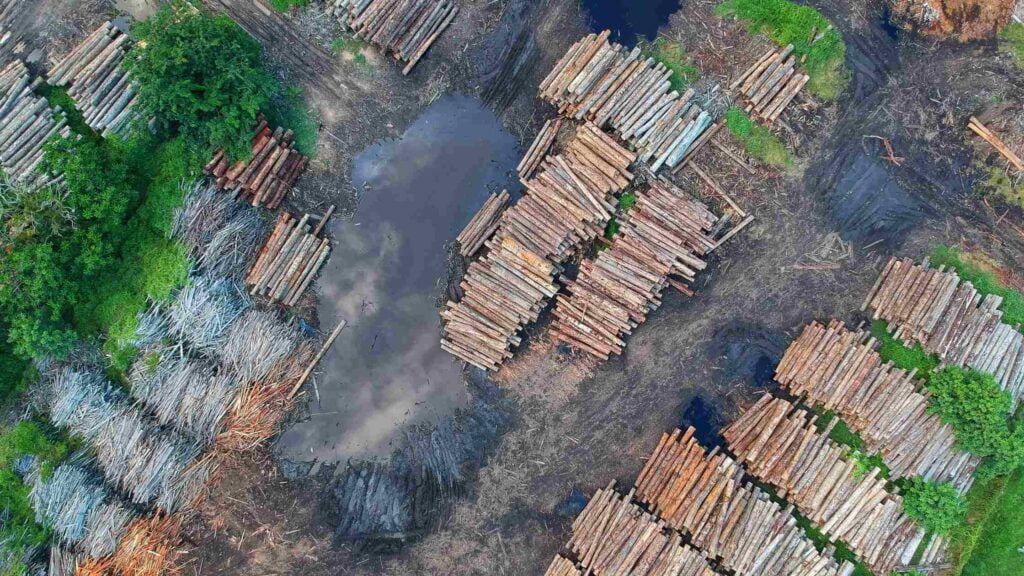
Causes for Deforestation: The leading causes of deforestation are as follows.
Shifting or Jhum cultivation: It is a traditional agroforestry system extensively practised in the northeastern region of our country. It involves chopping and burning forests followed by the cultivation of crops for a few years and abandoning reforestation.
Loss of species diversity: Many of the species are susceptible to even small disturbances or changes. The plants get affected, and also the animals which depend on these plants for food for survival become extinct sooner.
Loss of Medicinal value: Deforestation leads to the loss of medicinal extracts from plants and animals. Hence people have a high chance of diseases that cannot be cured easily.
Tribal life: Deforestation threatens the life of tribal people whose culture and survival depend upon the forests.
Increased Soil erosion: Deforestation causes increased soil erosion, which leads to landslides, flash floods and faster run-off of rainwater.
Food problems: As a result of soil erosion, countries lose food grain.
Affects rainfall: The pattern of rainfall get changed in deforested areas. The climate has become warmer due to the lack of humidity in the deforested regions.
Increases Environmental pollution: Deforestation leads to an increase in environmental pollution like air pollution, water pollution, soil pollution.
Affects Tourism: Loss of future markets for ecotourism.
Please do check our course on Good Environmentally Sustainable Practices from Ampersand Academy. Read more about Forest Resources.
Frequently asked questions
What does overexploitation of forests mean?
u003cpu003eIt means taking more wood, fuel or forest land than the forest can naturally regenerate, so its cover and biodiversity shrink.u003c/pu003e
What are the main causes of overexploitation?
u003cpu003eCommercial logging, fuelwood cutting, cattle grazing, shifting cultivation, mining and clearing forests for farms and cities.u003c/pu003e
How can overexploitation be reduced?
u003cpu003eThrough plantation forestry, controlled logging, community forest management, protected areas and incentives for landowners to keep trees standing.u003c/pu003e
Last updated on · Written by Vijay Gladwin